How You Can Grill on a Traeger Step by Step
To grill on a Traeger, start by choosing quality hardwood pellets and storing them dry. Set your grill on a stable surface, fill the hopper, and plug it in. Open the lid, turn on the grill, and set your desired temperature. Prepare your food with seasoning and let it rest before placing it on the preheated grill. Use a meat thermometer to check doneness and keep the lid closed for smoky flavor. Keep your grill clean for best results. There’s plenty more to master for perfect grilling every time.
How to Choose the Right Pellets for Your Traeger Grill
Although choosing the right pellets might seem straightforward, it directly affects your grill’s flavor and performance. You’ll want to pick pellets made from 100% hardwood for the cleanest burn and best taste.
Avoid pellets with fillers or additives, as they can produce unwanted smoke and affect your food’s flavor. Consider the wood type based on the flavor profile you enjoy—hickory adds a strong, smoky taste, while fruitwoods like apple or cherry offer a milder, sweeter smoke.
If you’re grilling poultry or fish, lighter woods work best, whereas beef and pork pair well with stronger woods. Also, check the pellet moisture content; drier pellets burn more efficiently and maintain consistent temperature.
Choosing quality pellets means you’ll get the best results every time you fire up your Traeger.
Setting Up Your Traeger: A Quick Start Guide
Now that you’ve picked the perfect pellets for your Traeger, it’s time to get your grill ready. Setting it up properly guarantees a smooth grilling experience.
Start by placing your Traeger on a stable, flat surface away from flammable materials. Next, open the hopper and fill it with your chosen pellets. Plug in the grill and switch it on. Allow it to preheat until the temperature stabilizes.
Here’s a quick setup checklist:
- Position grill on a flat, stable surface
- Fill hopper with pellets
- Connect to a power source
- Turn the grill on and set desired temperature
- Wait for the grill to preheat and stabilize
With these steps, your Traeger is all set to deliver delicious, smoky flavors.
Preparing Food for Your Traeger Grill
Preparing food for your Traeger grill starts with choosing the right cuts and seasoning them well. Pick fresh, quality meats or veggies that suit your recipe. Trim excess fat to prevent flare-ups but leave some for flavor.
Next, apply a dry rub or marinade evenly to enhance taste. Let your food rest at room temperature for about 20-30 minutes before grilling; this guarantees even cooking.
For vegetables, toss them in oil and seasoning to avoid sticking. If you’re cooking multiple items, consider their cooking times and thickness to plan the sequence.
Don’t forget to pat meats dry before seasoning to help the rub stick better. Proper preparation sets you up for a delicious, perfectly cooked meal on your Traeger.
Safely Igniting Your Traeger Pellet Grill
Before you fire up your Traeger pellet grill, you’ll want to make sure you’re following the proper safety steps to ignite it correctly. This guarantees a smooth start and prevents accidents.
Follow these key steps to safely ignite your Traeger:
- Check the pellet hopper to confirm it’s filled with quality wood pellets.
- Make sure the grill’s interior is clean of ash or debris.
- Open the lid before turning on the grill to prevent gas buildup.
- Plug in the grill and turn the power switch on.
- Set the temperature dial or digital controller to start the ignition sequence.
Once the igniter sparks, pellets will ignite within minutes.
Keep the lid open only at the start, then close it to maintain heat safely.
Adjusting Temperature Settings for Perfect Grilling
Once your Traeger pellet grill is safely ignited and heating up, you’ll want to fine-tune the temperature to match what you’re cooking.
Use the control panel to set the precise temperature—Traeger grills allow adjustments in 5-degree increments, giving you excellent control.
For delicate items like fish or vegetables, lower temperatures around 180-225°F work best. For steaks or burgers, crank it up to 400-450°F for a nice sear.
Remember, the grill will take a few minutes to stabilize at your chosen temperature, so be patient.
Keep the lid closed as much as possible to maintain consistent heat.
Adjusting temperature settings accurately guarantees even cooking and helps you achieve that perfect grill flavor every time on your Traeger.
Direct and Indirect Grilling Techniques on Your Traeger
Although your Traeger excels at maintaining steady temperatures, mastering both direct and indirect grilling techniques lets you reveal its full potential.
Direct grilling means placing food right over the heat source, perfect for quick-cooking items. Indirect grilling involves cooking food next to, not above, the heat, ideal for slow-cooking larger cuts.
Here’s how to use these methods on your Traeger:
- For direct grilling, set the grill to a high temperature (around 400°F) and cook food quickly.
- For indirect grilling, set a lower temperature (225°F-275°F) and place food away from the fire.
- Use direct grilling for steaks, burgers, and vegetables.
- Use indirect grilling for ribs, whole chickens, or roasts.
- Combine both methods for perfect searing and thorough cooking.
When and How to Turn Food on a Traeger Grill
Timing your flips and knowing how to turn food properly on a Traeger grill can make all the difference in achieving even cooking and perfect sear marks.
Generally, flip your food halfway through the estimated cook time. For thinner items like burgers or fish fillets, flip once to prevent drying out. Thicker cuts, such as chicken breasts or steak, may need multiple turns for even heat exposure.
Use tongs or a spatula to gently lift and flip, avoiding piercing the meat to retain juices. Wait until the food naturally releases from the grates before turning; if it sticks, give it more time.
Avoid flipping too frequently, as it disrupts cooking and searing. With practice, you’ll know exactly when to turn for delicious results every time.
How to Monitor Internal Food Temperature Accurately
Because grilling relies heavily on precise heat, you need to monitor the internal temperature of your food accurately to guarantee it’s cooked safely and to your preferred doneness.
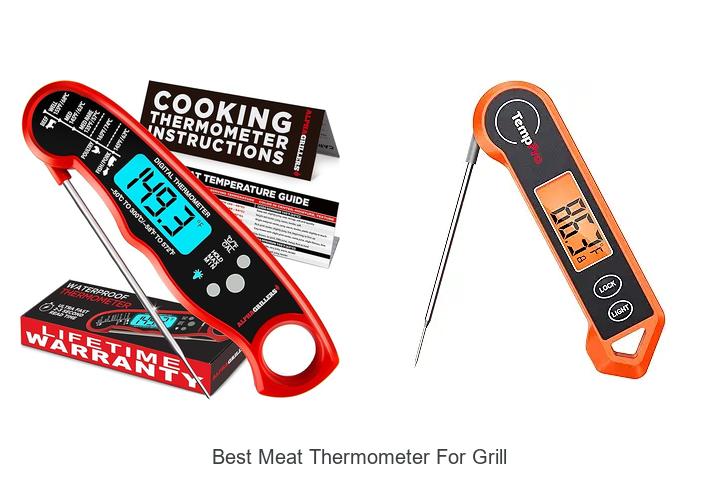
Using a reliable meat thermometer is essential for this. Here’s how to do it right:
- Choose a good digital instant-read or probe thermometer.
- Insert the thermometer into the thickest part of the meat, avoiding bone or fat.
- Check the temperature several times during cooking for accuracy.
- Know the safe internal temperatures for different meats (e.g., 165°F for poultry).
- Let the meat rest after cooking; the temperature can rise slightly.
How to Enhance Smoke Flavor on Your Traeger Grill
Monitoring your food’s internal temperature guarantees it’s cooked perfectly, but the flavor is what really sets your grilling apart.
To enhance smoke flavor on your Traeger, start by choosing the right wood pellets—hickory, mesquite, or apple add distinct tastes.
Keep your grill temperature low and steady, around 225°F, to allow smoke to infuse your food deeply. Avoid opening the lid frequently; every time you do, heat and smoke escape.
Consider using a smoke tube or adding extra pellets during longer cooks to boost smoke intensity.
Finally, let your food rest after grilling to absorb those smoky flavors fully.
These steps guarantee your dishes carry that signature Traeger smoky richness every time.
Using the Traeger WiFIRE App to Control Your Grill
How can you take full control of your Traeger grill without standing next to it?
With the Traeger WiFIRE app, you can manage your cooking remotely, making grilling more convenient than ever. Just connect your phone to the grill’s Wi-Fi and you’re ready to go.
Here’s what you can do with the WiFIRE app:
- Set and adjust temperature precisely from anywhere
- Monitor cooking progress in real-time
- Receive alerts when food reaches the perfect temperature
- Access pre-programmed recipes tailored for your grill
- Start or stop the grill remotely with a tap
Using the app lets you focus on other tasks while your Traeger handles the cooking perfectly.
Cleaning and Maintaining Your Traeger After Each Use
Controlling your Traeger grill remotely with the WiFIRE app makes cooking effortless, but proper cleaning and maintenance after each use keep it running smoothly for years to come.
Start by allowing the grill to cool completely before cleaning. Empty the grease drip tray and clean it thoroughly to prevent flare-ups.
Use a soft brush to remove ash and residue from the firepot and grill grates. Wipe down the exterior and interior surfaces with a damp cloth to remove grease and food particles.
Check the pellet hopper for any leftover pellets and remove debris to avoid jams. Regularly inspect the drip bucket and replace it if needed.
How to Troubleshoot Common Traeger Pellet Grill Issues
Although Traeger grills are designed for ease of use, you might occasionally run into issues like pellet feed problems, temperature fluctuations, or ignition failures.
To keep your grilling smooth, here’s how you can troubleshoot common problems:
- Check the hopper for jammed or damp pellets and clear any blockages.
- Inspect the auger motor to verify it’s running smoothly without unusual noises.
- Verify the temperature sensor is clean and properly connected.
- Confirm the fire pot is free of ash buildup that can smother the fire.
- Reset the grill by powering it off and on to recalibrate the system.
Delicious Recipes for Your Traeger Grill
Once your Traeger grill is running smoothly, it’s time to put it to good use with some mouthwatering recipes.
Start simple by smoking a classic brisket or slow-cooking ribs, letting the wood pellets infuse rich flavor.
Try grilling marinated chicken breasts or salmon fillets for a quick, tasty meal.
Experiment with vegetables like asparagus or corn on the cob, which develop a smoky sweetness when grilled.
Don’t forget dessert—grilled peaches or pineapple slices caramelize beautifully.
Use your Traeger’s temperature control to master each dish, ensuring perfect doneness every time.
With these recipes, you’ll impress family and friends and enjoy the full versatility your Traeger offers.
Keep exploring new flavors and techniques to make every cookout memorable.
How to Store Pellets and Traeger Accessories Properly
To keep your Traeger grill performing at its best, you need to store pellets and accessories properly. Pellets must stay dry to maintain their quality and burn efficiently. Moisture can cause clumping or poor combustion.
Accessories like grill covers, tools, and drip trays also need proper care to last longer.
Follow these tips to store your pellets and accessories right:
- Keep pellets in a sealed, airtight container away from moisture.
- Store pellets indoors or in a dry, cool place.
- Clean and dry accessories before storing them.
- Use a designated storage bin or box for tools and small parts.
- Cover your grill with a waterproof cover when not in use to protect it from the elements.
These steps help you grill consistently and extend your gear’s life.
Frequently Asked Questions
Can I Use My Traeger Grill Indoors or in Enclosed Spaces?
You shouldn’t use your Traeger grill indoors or in enclosed spaces because it produces carbon monoxide, which is dangerous. Always grill outside in a well-ventilated area to keep yourself and others safe while cooking.
What Are the Best Safety Practices for Transporting a Traeger Grill?
Before you cart your Traeger like a knight bearing his lance, secure it upright, disconnect propane, and cover it. Use padding to avoid scratches, and double-check it’s stable during transit to keep your grill safe and sound.
How Long Does It Take to Preheat a Traeger Grill on Average?
It usually takes you about 10-15 minutes to preheat your Traeger grill to around 450°F. Make sure the lid stays closed during this time to help it reach the temperature evenly and quickly.
Are There Specific Traeger Accessories Recommended for Winter Grilling?
You’ll need Traeger’s insulated blanket and a grill cover—they’re like armor against winter’s fury! These accessories keep your grill warm and efficient, letting you grill delicious meals even when it’s freezing outside.
Can I Convert My Traeger Grill to Use Other Types of Fuel?
You can’t convert your Traeger grill to use other fuels since it’s designed specifically for wood pellets. Trying to switch fuels could damage the grill or void the warranty, so it’s best to stick with pellets.
Conclusion
Now that you’ve got the hang of grilling on your Traeger, you’re ready to turn up the heat and enjoy mouthwatering meals with ease. Remember, like they say, practice makes perfect—so don’t be afraid to experiment with different pellets, temperatures, and recipes. Keep your grill clean and well-maintained, and you’ll be firing up delicious dishes for years to come. Happy grilling, and may every cookout be a slam dunk!